September 25, 2023 (Monday)
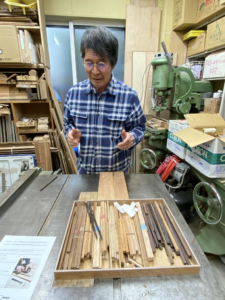
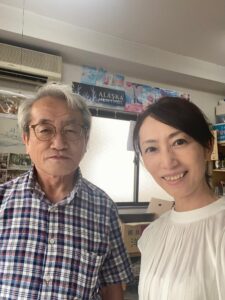
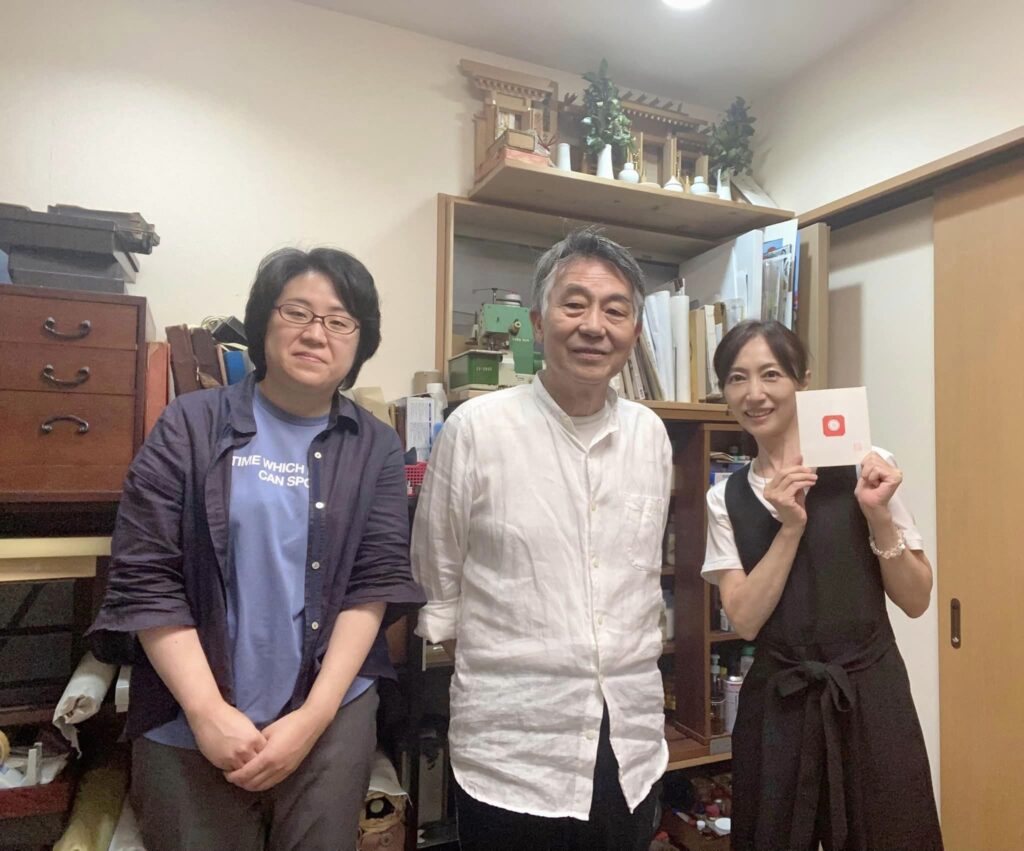
At a recent meeting of the Ota City Association for the Development of Traditional Crafts, I struck up a lively conversation with Mr. Noriji Sakurai, a monshō-uwashi (family crest artisan), when we realized we live in the same neighborhood.
This time, I had the opportunity to visit his home studio.
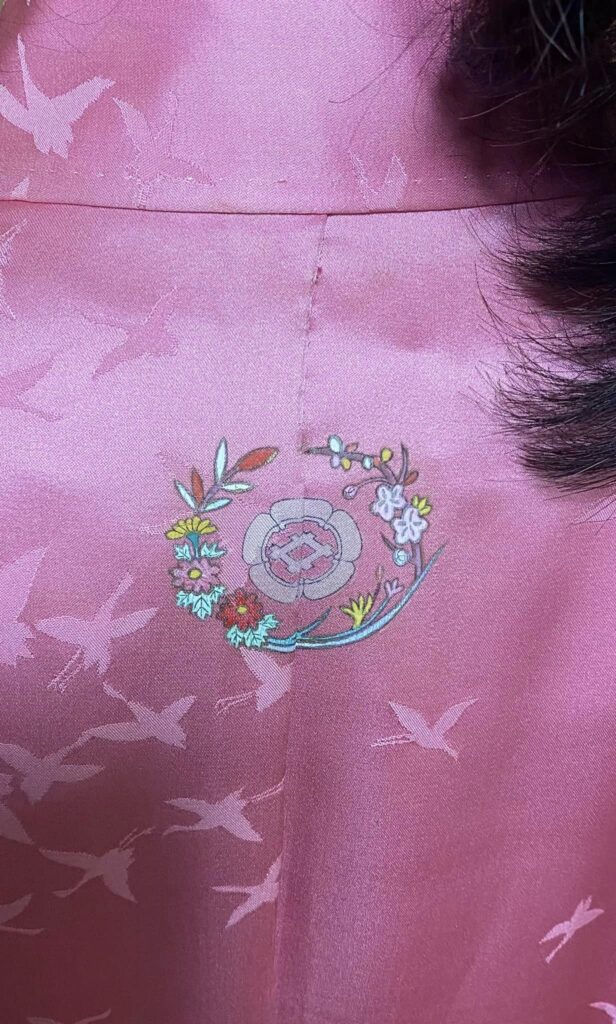
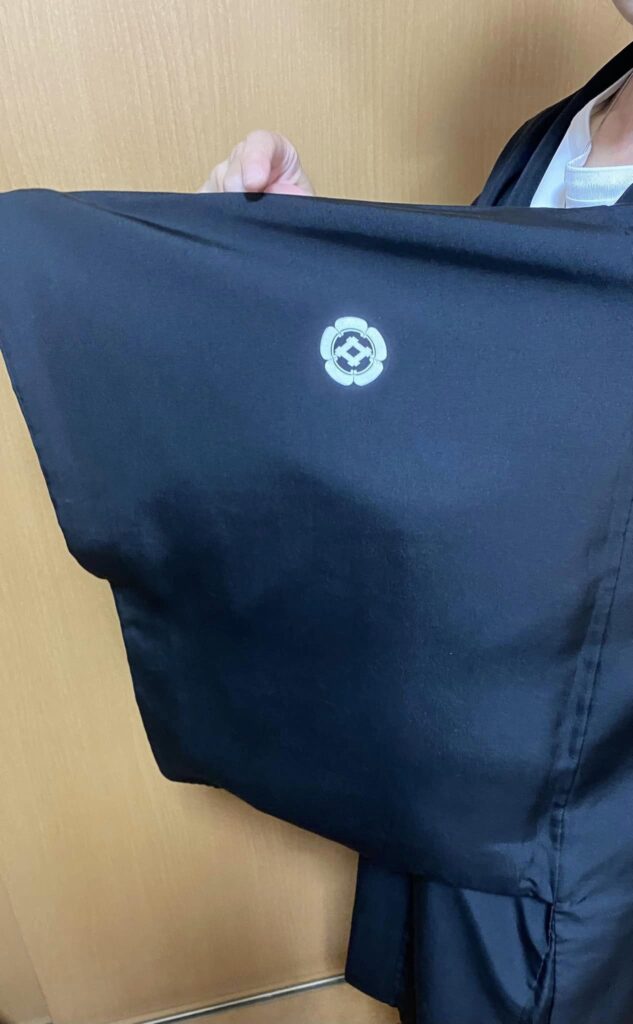
As a monshō-uwashi, Mr. Sakurai hand-paints family crests onto kimono and other items. However, his work involves far more than simply drawing the crest itself.
He carries out every step of the process on his own, including:
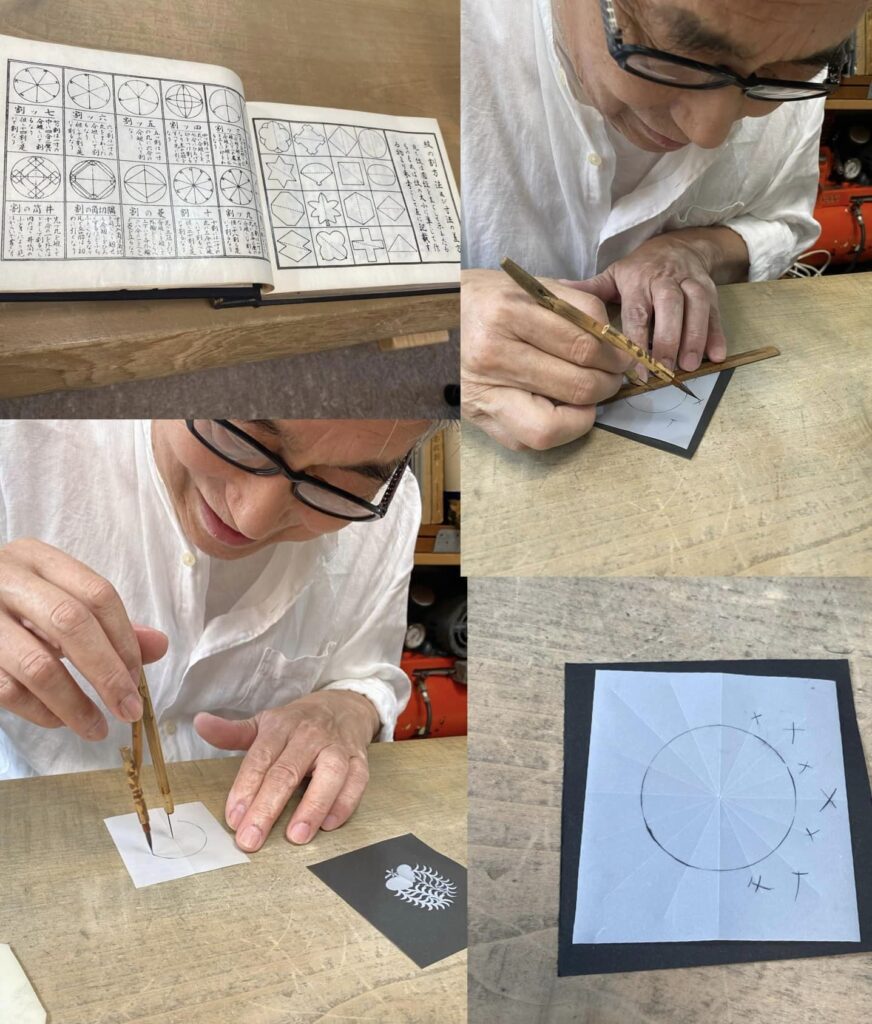
preliminary sketching, stencil carving, discharge dyeing, rubbing in pigments, steaming, and fine line detailing.
Watching him carve crest patterns and draw precise lines was breathtaking—requiring an extraordinary level of concentration and delicacy.
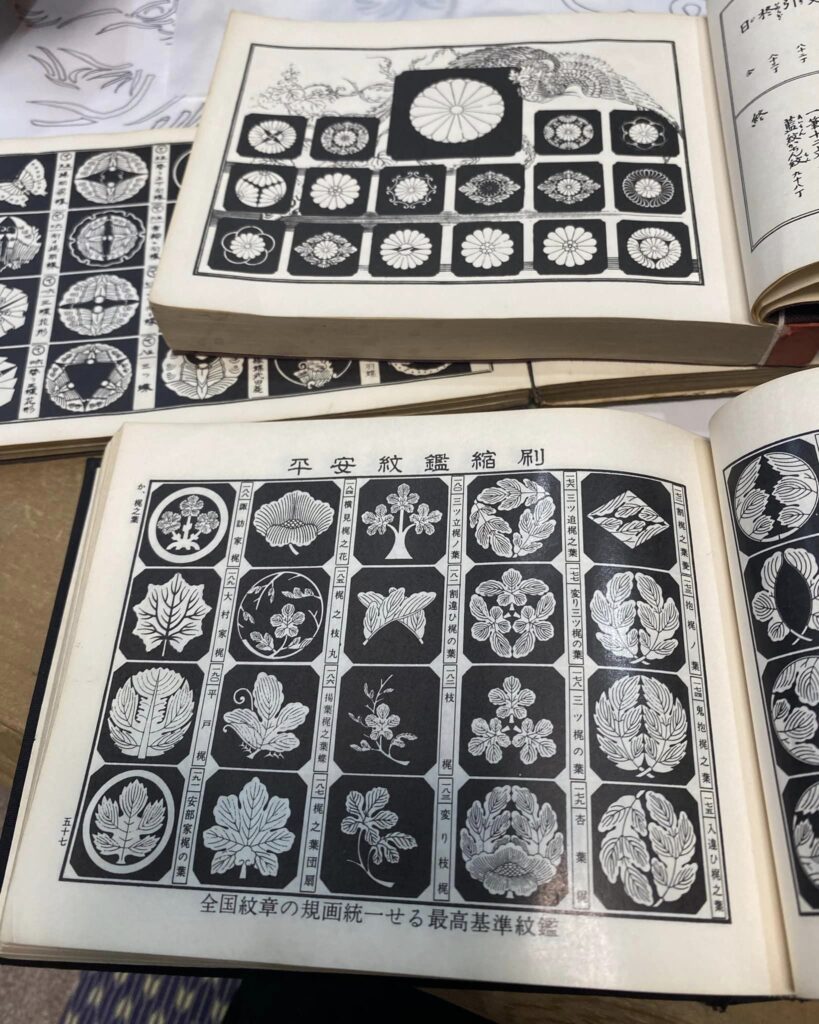
I have a deep interest in traditional patterns, so being able to look through his collection of family crest designs was incredibly exciting for me.
One aspect that particularly fascinated me was how he determines the proportions when designing a crest.
He uses a bamboo compass-like tool called a “bunmawashi” to divide circles into precise segments, establishing guides for where each element should be placed. From these geometric foundations, intricate patterns are created—a process that truly amazed me.
Today, design technologies such as computers, copying, and silk-screen printing have made reproduction much easier. However, artisans who continue to preserve and pass down these traditional handcraft techniques are becoming increasingly rare.
Family crests are said to have originated as early as the Heian period (or even earlier), and there are approximately 6,000 types. When including subtle variations in design, the number is said to reach as many as 20,000.
I sincerely hope that these techniques, these crests, and the spirit of the artisans can continue to be preserved for future generations.
With that in mind, Mr. Sakurai and I have begun to shape what might become a future challenge—or perhaps a mission—for us to carry forward.
There’s much to think about from here.
.